Cultural Category: Practice / Memory / Continuity
Short Context
In Berbice, healing does not always come through formal systems.
Sometimes, it begins with what is still possible.
Main Entry
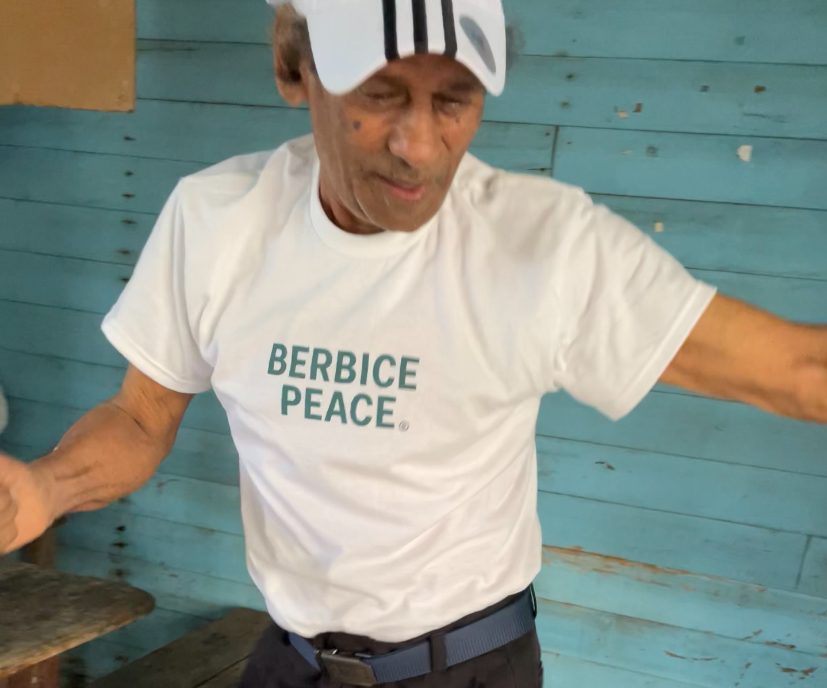
Rudolph Ramkishun, also known as Uncle Rudy lived for many years in New York before making a decision that few are willing to make, he chose to return home to Guyana.
Not out of necessity, but by choice. In his own words, America is “a great country for a young person,” a place where he became a man, but not where he wanted to age.
When he arrived back in Berbice, the transition was not easy. He returned in a wheelchair, without a support system in place. Left outside his yard, he wheeled himself onto his land, alone.
What followed was not planned. It began with movement. Without formal rehabilitation or physical therapy, Uncle Rudy turned to dancing. Not as performance, but as practice, repetition, rhythm, and persistence. Over time, that movement became a method of recovery. Step by step, he regained his mobility. But something else happened along the way.
Through sharing his dancing online, he began to build a community, one that extended beyond Berbice. What started as a personal act of resilience became a point of connection for others watching, engaging, and responding. In this way, his approach sits outside of traditional frameworks. It is not clinical. It is not prescribed.
Yet it reflects a growing understanding that movement, especially when tied to joy, rhythm, and meaning, can play a significant role in both physical and mental health outcomes. Research continues to show that dance-based movement can improve mobility, balance, and emotional well-being, particularly among older adults and individuals recovering from limited mobility.
At the same time, his story intersects with a broader issue: social isolation. For many older adults, especially those navigating transitions across countries, isolation can shape both physical and mental health. Uncle Rudy’s response was not institutional, it was personal. He moved. He shared. He connected. What he has done is not only brave, it is instructive.
It reminds us that healing does not always arrive through formal channels. Sometimes, it is built through consistency, environment, and a willingness to begin again with what is available.
Historical Context Sidebar
Dance has long been studied as a form of therapeutic movement. According to the National Institutes of Health, dance-based interventions have been shown to improve balance, mobility, and overall quality of life, particularly among older adults and those recovering from physical limitations.
Closing
“I love Berbice. I was born and grew up in this place.”
For Uncle Rudy, home is not just where he returned. It is where he continues.
Berbice Peace®
Reference
Lu J, Abd Rahman NA, Wyon M, Shaharudin S. The effects of dance interventions on physical function and quality of life among middle-aged and older adults: A systematic review. PLoS One. 2024 Apr 19;19(4):e0301236. doi: 10.1371/journal.pone.0301236. PMID: 38640093; PMCID: PMC11029638.
Leave a Reply