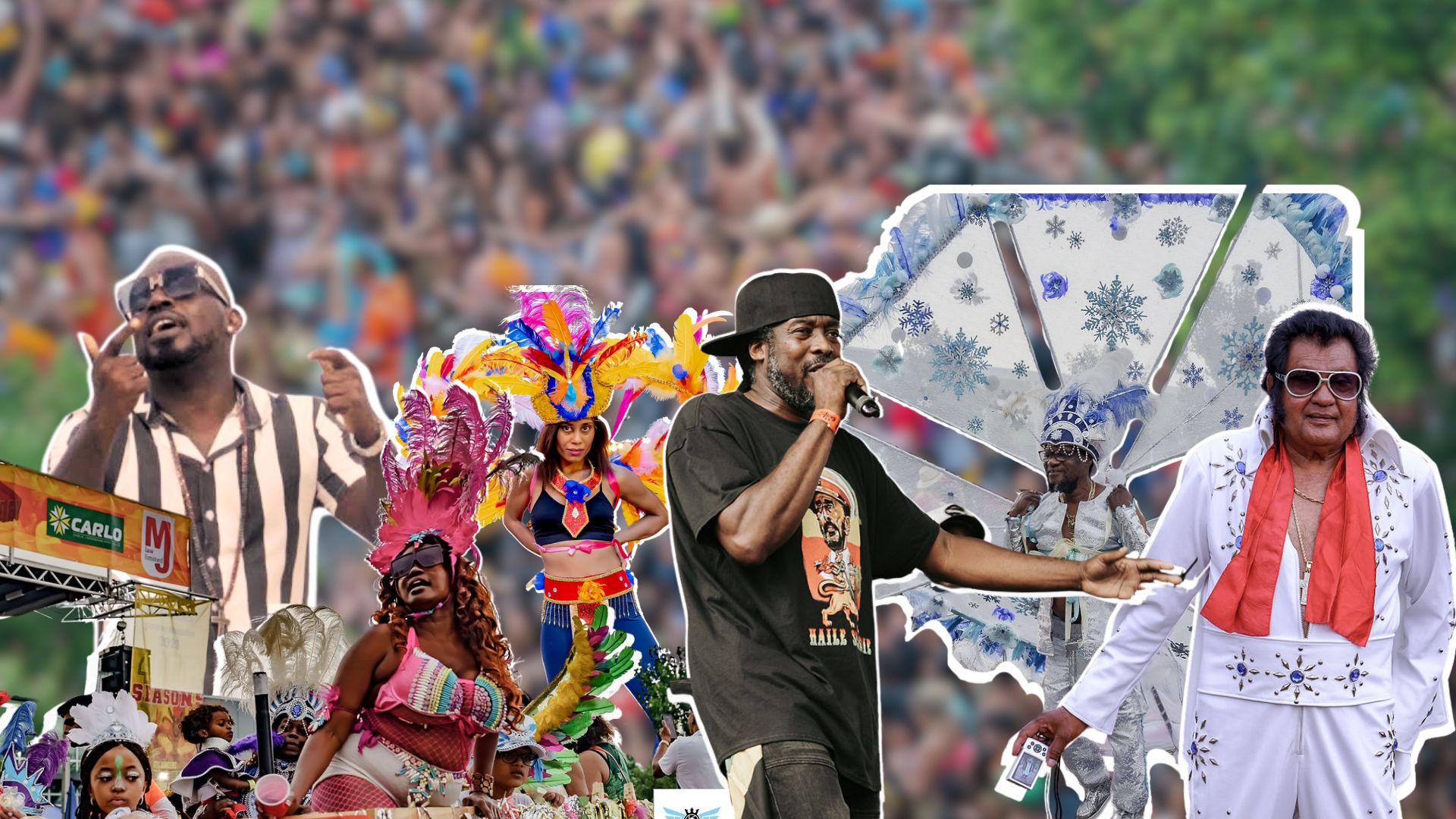
Carifest was born from a simple need: Caribbean people in Minnesota wanted to find one another.
For Caribbean immigrants who arrived in Minnesota in the late 1960s and early 1970s, community was not always easy to find. People had come from Guyana, Antigua, Trinidad, Jamaica, and other parts of the Caribbean, often in search of education and opportunity. But outside of work and school, there was a desire to gather with people who understood the food, music, traditions, humor, and rhythms of home.
For Carifest founders Charles Peterson, an Antigua-born Minnesotan who has called Minnesota home for more than 50 years, and Carlo Latchmansign, who was born in Georgetown, Guyana and has lived in Minnesota since 1971, those early gatherings helped lay the foundation for something much larger.
The story began informally, around cricket. On weekends, Caribbean community members would come together to play cricket, share food, cook chicken curry, have a few drinks, and simply spend time with one another. What mattered was not just the game. It was the opportunity to reconnect with Caribbean life in a place far from the islands and mainland countries they had left behind.
As those gatherings grew, so did the desire to create something more intentional. The idea for Carifest emerged from a desire to bring Caribbean people together while also introducing the broader Minnesota community to Caribbean culture. The vision was a carnival-style celebration with a parade, costumes, masquerade, music, food, and performances representing the diversity of the Caribbean.
Carifest was established in 1994, growing from those early community efforts into an annual celebration of Caribbean arts and culture in Minnesota. (Carifest)
The concept was deliberately broad. Calypso, soca, reggae and other Caribbean sounds could share the same space. Guyanese, Trinidadian, Jamaican, Antiguan and other Caribbean traditions could be represented together. Rather than separating cultures, Carifest created a place where the Caribbean community could see itself as a larger collective.
That remains central to the organization’s mission today. Twin Cities Carifest describes its purpose as strengthening and educating the greater community about Caribbean culture while creating a unified and culturally rooted Caribbean community in the Twin Cities. Its vision also emphasizes bringing greater visibility to an underrepresented community and creating a platform where people can engage with and share their culture. (Carifest)
Over the years, the celebration has brought Caribbean entertainment to Minnesota from across the region and diaspora. The founders recall performers including the Mighty Sparrow, Calypso Rose, Destra and others who have helped make Carifest a place where Caribbean music and performance can be experienced far from the Caribbean itself.
But the celebration has never been only about entertainment. Food has remained an important part of the experience. Authentic Guyanese, Jamaican and Trinidadian dishes give people another way to encounter the Caribbean. For those who grew up with these foods, they can bring back memories of home. For others, they offer an introduction to cultures they may not otherwise encounter.
That emphasis on food, music and community reflects something deeper about Caribbean identity: culture is not something that exists only in museums or history books. It is cooked, played, danced, shared and passed from one generation to another. That passing of the baton has become increasingly important to Carifest’s founders.
Today, younger Caribbean Minnesotans are becoming more involved in costumes, masquerade, organization and performance. Charles and Carlo describe a conscious effort to give younger people opportunities to take leadership roles rather than simply asking them to participate in something created by an older generation.
The goal is not only to preserve what already exists, but to allow young people to shape what comes next. That includes music. A community steel band, Panatics, has emerged as another way of keeping Caribbean musical traditions alive in Minnesota. Young people have become part of the group, and there are plans to develop a junior band as more steel drums and young musicians become available.
The same thinking extends beyond music and carnival. Carifest’s organizers are interested in creating educational opportunities that expose young people to technology, entrepreneurship, professional possibilities and other skills that can help them build their futures.
For the founders, cultural preservation and community development belong together. They point to the Caribbean community’s presence across Minnesota’s professional and business landscape, including engineers, contractors, business owners and other professionals. Their message to young Caribbean people is one of confidence: their heritage should not limit their ambitions. Instead, it can be part of the foundation from which they build.
Carifest’s work also reflects a broader Caribbean tradition of community self-reliance. The organization describes itself as a community-operated nonprofit, relying on volunteers, donors and sponsors to make the annual celebration possible. Its current mission emphasizes strengthening, educating and entertaining the community. (Carifest)
More than three decades after its beginnings, the significance of Carifest is therefore larger than one weekend. It is about what happens when people who once gathered around a cricket match decide to build something that can outlast them. It is about the Antiguan who has spent more than five decades making Minnesota home, the Guyanese student who arrived in Minnesota in the early 1970s, and the generations that followed them.
It is about costumes and calypso, steel pan and reggae, curry, cricket and community. It is about seeing Caribbean flags in Minnesota and knowing that the culture did not disappear when people left home. Instead, they carried it with them. And, through Carifest, they created a place where that culture could be shared, celebrated and carried forward.
Interview recorded at Minnesota Guyana Day, hosted by the Guyanese Association of Minnesota, a registered 501(c)(3) organization co-founded by Trevor Samaroo, Jaya Soma James, and Annet Singh.
After the Makers: What We Carry.