Cultural Category:
Land / Labor / Movement / To Know
Context
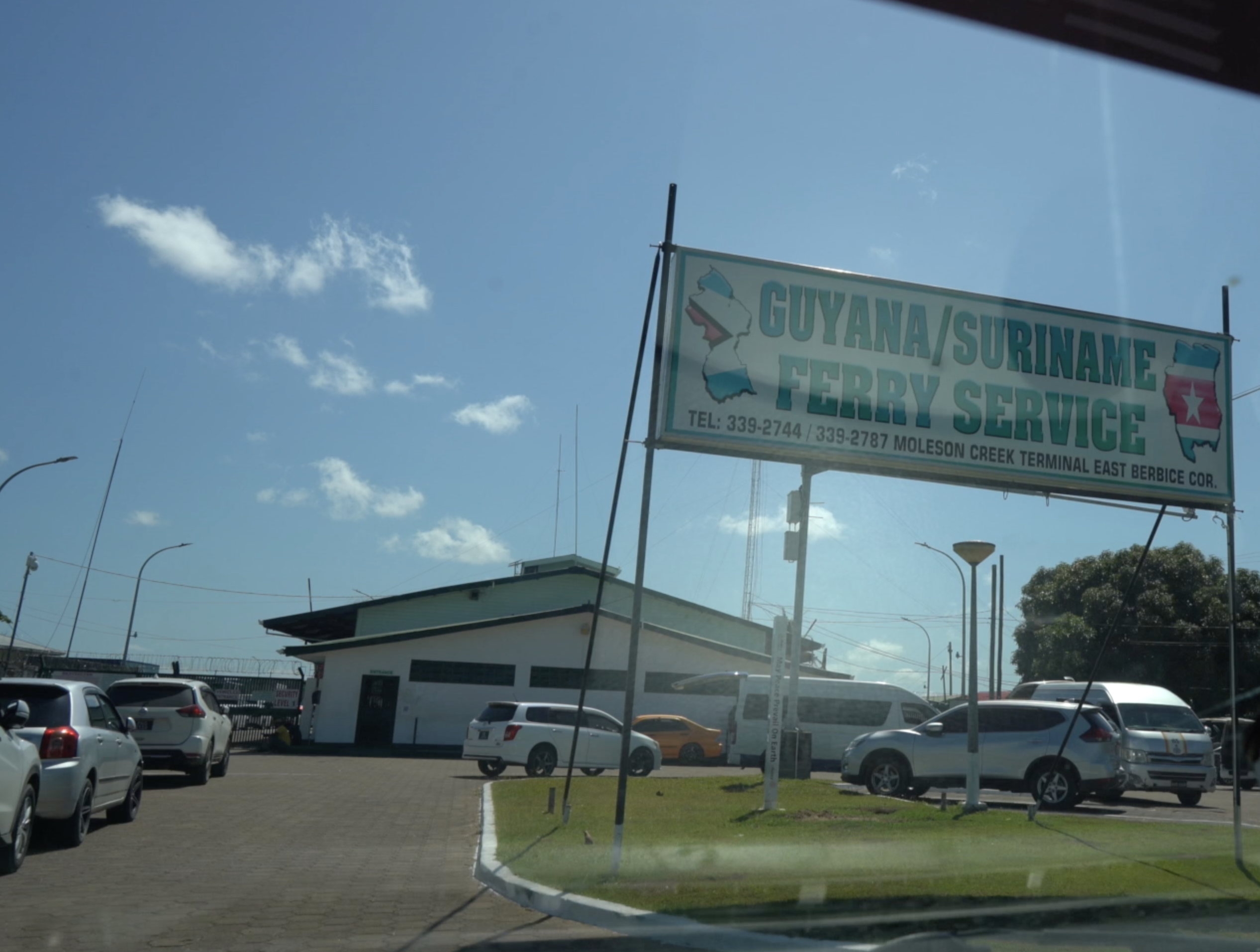
At the eastern edge of Berbice, where Guyana meets Suriname, Moleson Creek functions as more than a border. It is a point of passage, of people, goods, and everyday exchange. Nearby, Long Island exists within this same system, connected by water, proximity, and routine movement.
To understand this space is not only to observe it, but to know how it works, who sustains it, and what continues there daily.
Main Entry
At Moleson Creek, movement is steady.
Not rushed, not performative, just ongoing. Boats arrive. People gather. Goods shift hands. The crossing holds its rhythm through repetition.
At the stelling, that rhythm becomes visible.
A vendor awaits, not formally organized, but essential to the function of the crossing. This young fruit vendor stands with his mix prepared for those passing through.
He is not separate from the crossing.
He is part of how it works.
For travelers, the crossing may feel temporary, a transition between Guyana and Suriname. But for those who remain, it is daily practice. The vendor meets people where they are: arriving, waiting, leaving.
In that exchange, something more than transaction takes place.
There is recognition. Familiarity. Timing.
What some call Shatakh Matakh, the mix made when ingredients are limited but still made to work, exists here not only in food, but in practice. The ability to adapt, assemble, and continue.
Places like Moleson Creek do not sustain themselves.
They are sustained by people who show up.
Who set up.
Who remain.
Long Island sits within this same network, less visible, but connected. Movement continues there as well, shaped by water, distance, and routine.
To know this place is to understand that its function is not held by infrastructure alone, but by those who participate in it daily.
Berbice Peace®.
Historical Context Sidebar
Moleson Creek functions as a key crossing point between Guyana and Suriname along the Corentyne River, facilitating movement, trade, and everyday exchange. The stelling operates as a site of small-scale commerce, where vendors provide goods and services to travelers.
Recent infrastructure developments, including the Palmyra to Moleson Creek road project, signal the continued importance of this corridor within Region Six. As outlined by both state and independent reporting, these investments are expected to reshape access, movement, and regional connectivity, further embedding Moleson Creek within Guyana’s economic and transport systems.
Sources / References
- Department of Public Information — Palmyra to Moleson Creek road project set to reshape Region Six
- Corriverton Co. Archive (Primary Documentation – Video) https://youtu.be/kA2GGaddAaQ
- Oral Observation (Moleson Creek, Berbice – field documentation)